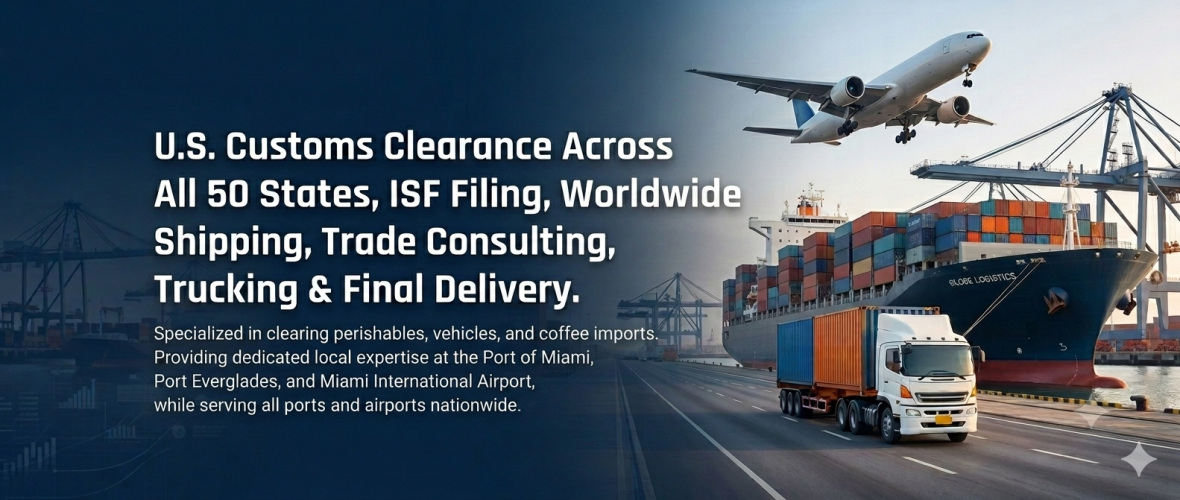
Importing seafood through Miami’s bustling transit hubs requires speed, precision, and strict compliance. Because fish and shellfish are highly perishable, even a minor paperwork error can result in costly delays, spoilage, or cargo destruction.
Whether you are shipping fresh catch via Miami International Airport (MIA) or ocean freight through PortMiami, navigating the overlapping regulations of U.S. Customs and Border Protection (CBP) and the Food and Drug Administration (FDA) is critical to your bottom line.
Critical FDA & CBP Requirements for Seafood
All commercial seafood shipments entering the United States are subject to intensive scrutiny. To ensure your cargo is cleared without unnecessary holds, you must satisfy three foundational federal requirements:
- FDA Prior Notice: You must file a Prior Notice with the FDA before your shipment arrives at the port of entry. For air freight, this must be submitted no less than 4 hours before flight arrival; for vessel cargo, at least 8 hours before arrival. Failing to file Prior Notice will result in the immediate refusal of your food shipment.
- HACCP Guidelines Compliance: Importers must comply with the FDA’s Hazard Analysis Critical Control Point (HACCP) regulations. This requires maintaining strict records demonstrating that foreign processors follow safety controls equivalent to domestic facilities.
- Bioterrorism Act Registration: Every foreign facility involved in manufacturing, processing, packing, or holding your seafood must be registered with the FDA. Your customs entry documentation must accurately list these registration numbers.
Document Checklist for Seafood Customs Clearance
When submitting your entry packet to CBP, completeness is everything. Ensure your documentation package includes the following core components to avoid dynamic holding patterns:
| Document Name | Required Details & SEO Purpose |
| Commercial Invoice | Must explicitly detail the scientific name, common name, presentation (e.g., fresh, frozen, whole, gutted, fillets), and weight. |
| Packing List | Outlines container counts, packaging types, and precise temperature-control parameters. |
| Bill of Lading / Air Waybill | Proves ownership and tracks the transport path from the origin country directly to Miami. |
| NOAA Form 370 | The Fisheries Certificate of Origin, required for specific tuna and marine mammal-adjacent products to verify dolphin-safe harvesting |
Note: Depending on the specific species (such as shrimp or toothfish), additional documentation like SIMP (Seafood Import Monitoring Program) data may be required to track the catch from harvest point to entry.
Temperature-Controlled Logistics & Cold Storage Exam Sites
Fresh and frozen seafood are highly time-sensitive commodities. When CBP or the FDA flags a container for a routine inspection or intensive physical examination in Miami, maintaining the cold chain is paramount.
- Preventing Spoilage at PortMiami & MIA: Delays on the tarmac or terminal docks can ruin an entire shipment. Cargo must be moved swiftly to refrigerated facilities.
- Centralized Examination Stations (CES): If an intensive physical exam is ordered, your customs broker must coordinate transportation using refrigerated trucks to an approved temperature-controlled CES or specialized cold storage warehouse in the Miami area. This ensures your products remain frozen or chilled at safe baseline temperatures throughout the inspection process.
Partner with a Miami Customs Brokers
Seafood clearance isn’t a process you should leave to guesswork. Working with a licensed, localized customs broker who specializes in perishable commodities ensures that your filings are flawless, your food safety protocols are met, and your cargo clears custody before temperature variations ruin your investments.
Request a Free Seafood Import Quote
Are you planning an upcoming shipment of fresh or frozen seafood through Miami? Let our experienced logistics team handle the compliance, FDA filings, and rapid CBP clearance on your behalf.
Fill out our brief contact form below to get started with a specialized customs expert today.


Looking for our official service directory? View our primary [Miami Fresh & Frozen Seafood Customs Clearance] service page.