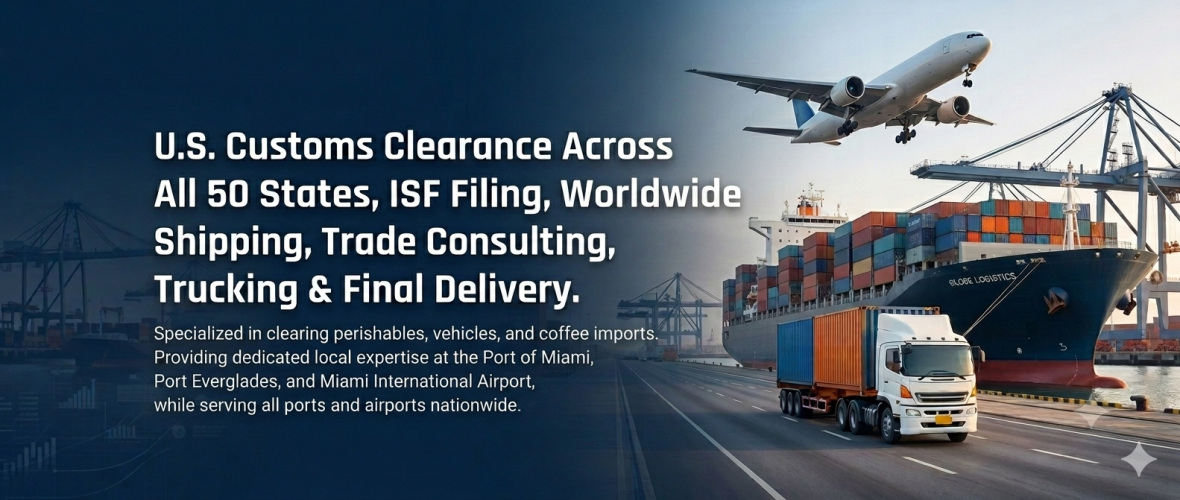

As the undisputed aviation logistics gateway between North America, Latin America, and the Caribbean, Miami handles a massive volume of critical aerospace cargo every single day. For Maintenance, Repair, and Overhaul (MRO) facilities, commercial airlines, and specialized parts distributors, moving replacement components across borders without friction is essential to keeping fleets operational.
Whether your aviation shipments arrive via Miami International Airport (MIA) cargo terminals or through maritime containers at PortMiami and Port Everglades, mastering U.S. customs compliance and local drayage is the key to preventing costly grounding.
Why Miami is the Epicenter for MRO and Aviation Logistics
South Florida is home to one of the densest concentrations of aviation parts suppliers, MRO operations, and freight specialists in the Western Hemisphere. The Doral and Miami Lakes corridors are particularly dense with aerospace logistics operations capable of having a part picked, documented, and delivered rapidly.
When a commercial carrier experiences an unexpected component failure or a routine overhaul parts shipment arrives from global manufacturing centers, the routing almost always leads through South Florida. However, moving high-value MRO components—ranging from jet turbine blades and avionic control modules to hydraulic pumps and landing gear assemblies—requires specialized regulatory handling. A delay at the border can quickly escalate into a costly Aircraft on Ground (AOG) crisis.
Core Regulatory Challenges in MRO and Aviation Imports
Unlike standard commercial merchandise, aerospace components face stringent oversight and documentation demands:
- Precision HTS Classification: Differentiating between complete aircraft parts, raw replacement materials, and specialized engine sub-assemblies requires exact Harmonized Tariff Schedule (HTS) classification to ensure accurate duty calculation and avoid CBP compliance audits.
- Strict Valuation & Serial Number Tracking: Customs and Border Protection (CBP) frequently audits high-value aviation imports. Commercial invoices must explicitly match serial numbers, part numbers, and FAA/EASA airworthiness documentation.
- Partner Government Agency (PGA) Alignment: Depending on the item, components may require specific clearance procedures, hazardous materials declarations, or hazardous chemical compliance (such as specialized sealants, paints, or pressurized units).
Step-by-Step Blueprint for Fast-Tracking MRO Shipments
To maintain tight turnaround times and protect your supply chain from bottlenecks, experienced importers rely on a structured clearance and transport protocol:
- Pre-Arrival Document Transmission: Transmitting commercial invoices, air waybills (AWBs), Bills of Lading, and airworthiness certificates to your customs broker before the flight or vessel touches down.
- Proactive ISF and Customs Filing: Ensuring ocean-bound MRO parts have accurate certified 10+2 ISF customs filing executed well ahead of vessel loading to avoid heavy liquidated damages.
- Synchronized Port Release & Drayage: Coordinating real-time electronic customs releases with local transport. Through our dedicated partner operations at Miami Container Drayage, we provide seamless PortMiami container drayage services to pull containerized aviation spares the exact moment they clear inspection.
Comprehensive Aerospace Customs Brokerage & Core Services
Managing global aerospace supply chains requires specialized operational capabilities to keep time-critical inventory flowing smoothly across international borders:
- Customs Clearance Support: Coordinate entries, electronic release processing, and rapid issue resolution to minimize downtime risks at South Florida gateways.
- Import/Export Documentation Review: Rigorous auditing of commercial invoices, packing lists, and transport paperwork to catch discrepancies before submission.
- Tariff Classification (HS Codes): Expert technical classification support for parts, components, assemblies, and repair/return entries to ensure duty accuracy and compliance.
- Duty & Tax Consulting: Strategic guidance to validate product value, country of origin, and eligibility for preferential trade treatment programs to manage landed costs effectively.
- Bonded Shipments & Transit Support: Utilizing bonded warehouse and transit options when appropriate to support freight transit, duty deferral, or special routing requirements.
- Compliance & Recordkeeping Advisory: Establishing structured workflows, process consistency, and audit-ready recordkeeping standards tailored to the aerospace industry.
Typical Aerospace Shipment Types We Handle
Our Miami-based brokerage and logistics infrastructure handles complex, time-critical movements across a diverse spectrum of aerospace goods:
- Aircraft Parts & Line Replaceable Units (LRUs): Rapid clearance for fast-moving components, avionics modules, and precision fasteners.
- Engines, Engine Parts, and Rotable Pools: Specialized import handling for high-value turbine assemblies and rotable pool exchanges requiring strict serial number verification.
- Tooling, Jigs, Fixtures, and Ground Support Equipment: Streamlined entry for maintenance equipment moving between international repair stations and hangars.
- MRO Shipments, Repairs, and Returns: Management of RMA documentation, temporary import entries, and repair/return cycles.
- Prototypes, Test Equipment, and Calibration Items: Specialized tracking for sensitive testing apparatuses requiring exact compliance documentation.
- Hazmat-Capable Shipments: Managed per strict carrier requirements for chemical or pressurized aviation components.
Commonly Required Documents for Aerospace Imports
To ensure smooth processing without unexpected holds, ensure your supply chain network prepares the following documentation package based on your shipment profile:
- Commercial Invoice: Must include clear part descriptions, exact values, currency, and agreed Incoterms.
- Packing List: Detailed piece counts, weights, dimensions, and carton markings.
- Transport Documentation: Air Waybill (AWB) or Bill of Lading (B/L).
- Certificate of Origin: Required when claiming preferential duty treatment under trade agreements.
- Export Documentation: Proof of lawful export from the origin country where applicable.
- Permits and Authorizations: Required documentation for controlled goods or specialized items.
- Repair and Return Records: Return Merchandise Authorization (RMA) numbers and prior export details for items moving out for maintenance and returning to the U.S.
Secure Your MRO Supply Chain with Expert Local Support
For specialized South Florida Aerospace Logistics, navigating complex regulatory frameworks requires a dedicated partner expert in Aviation Parts Customs Clearance and Aircraft Engine Import Compliance. Our team provides 24/7 Aircraft On Ground (AOG) Customs Clearance
and comprehensive MRO Customs Brokerage to eliminate supply chain bottlenecks across regional gateways. Whether you need rapid air freight entry for Miami International Airport Air Cargo, certified ISF 10+2 Filing Aviation support, or specialized PGA EPA Aviation Clearance, our end-to-end MRO Logistics Miami solutions keep your fleet operational. From specialized MRO Customs Clearance for routine Maintenance Repair Overhaul (MRO) components to ocean freight coordination—including PortMiami Container Drayage
and Port Everglades Heavy Drayage—we deliver the precision execution required by top-tier aviation operators. As a leading AOG Customs Broker Miami, we bridge port operations directly to the hangar.
Request a Free Customs Quote Today!
